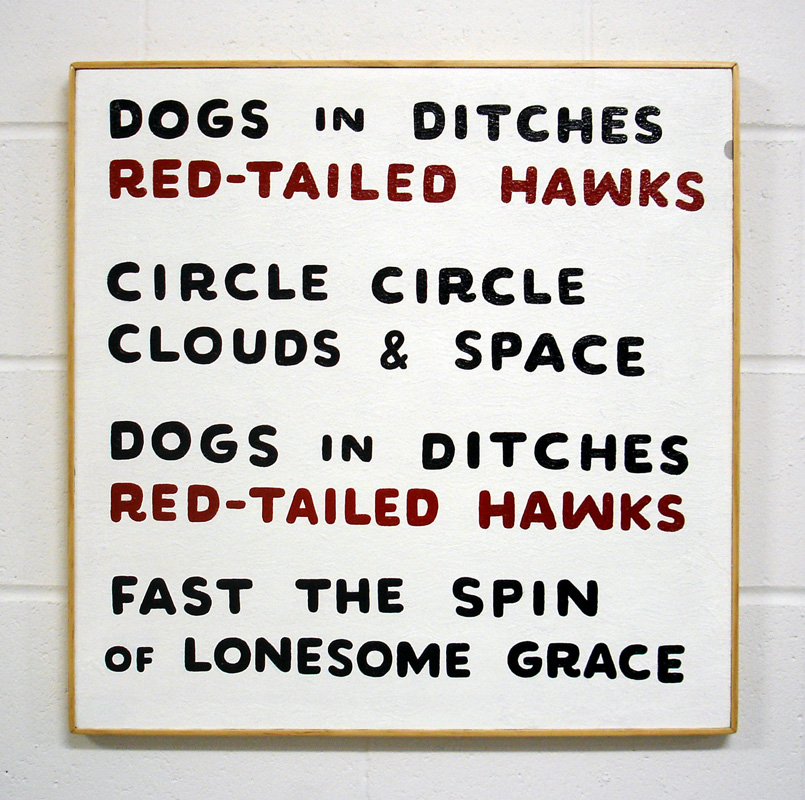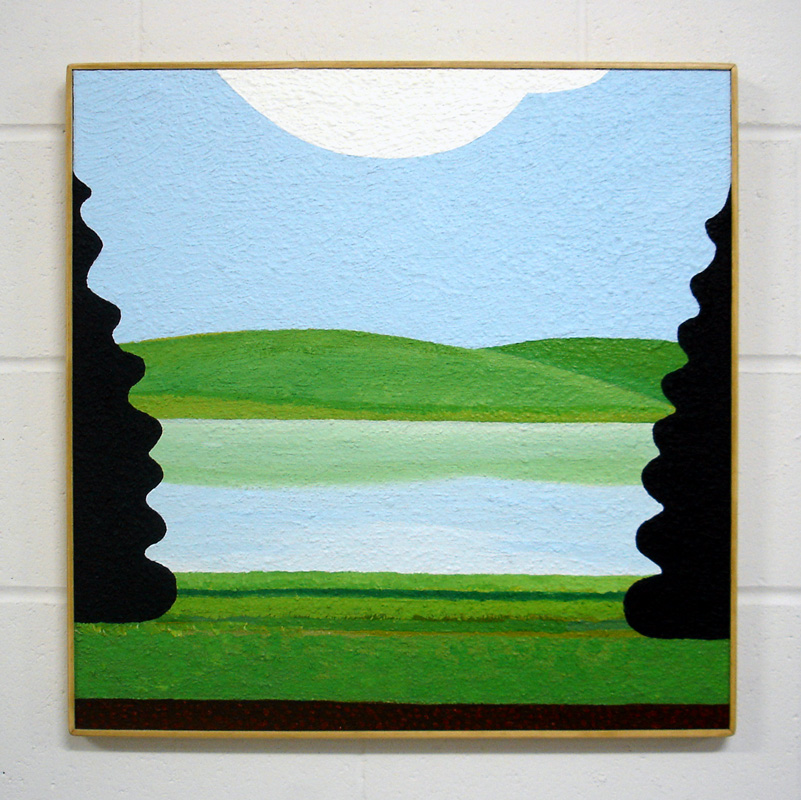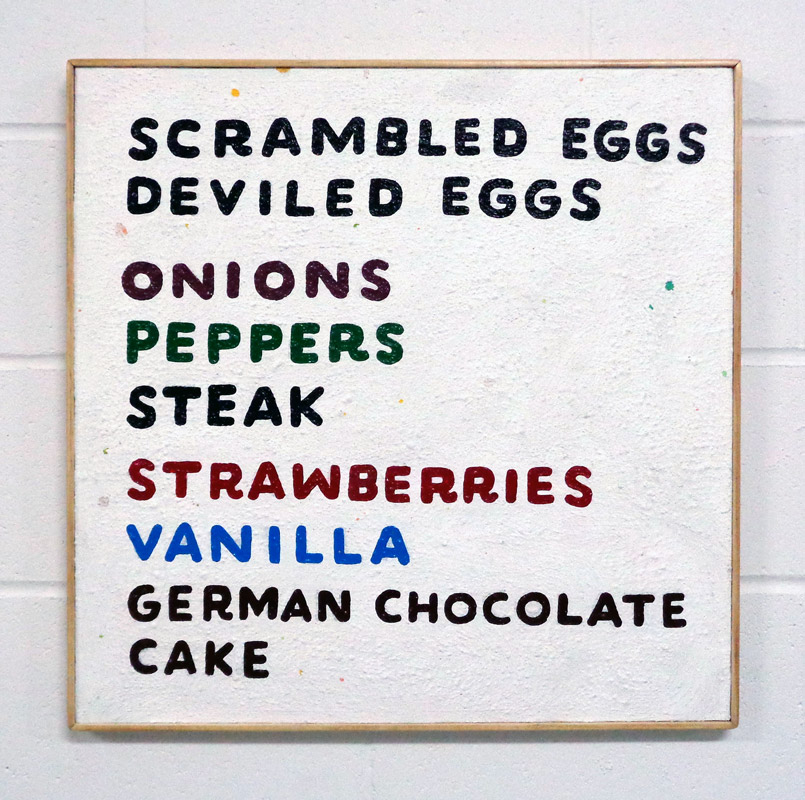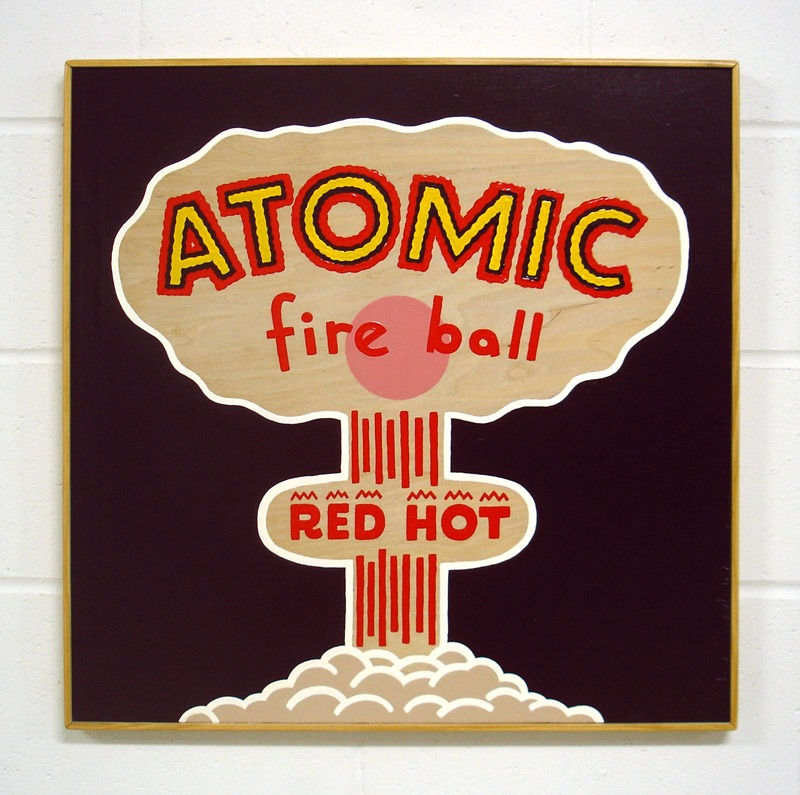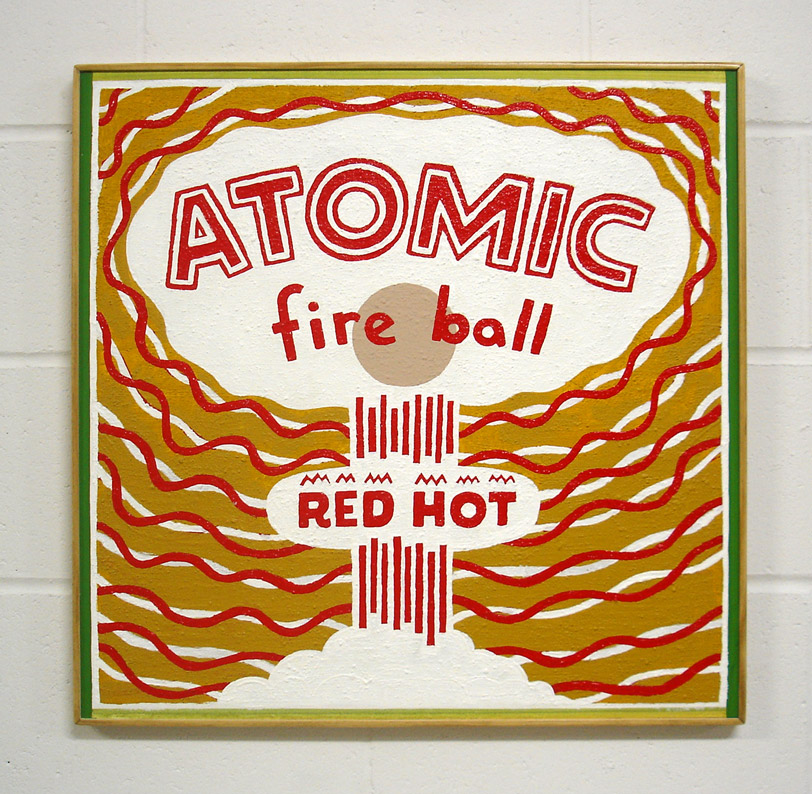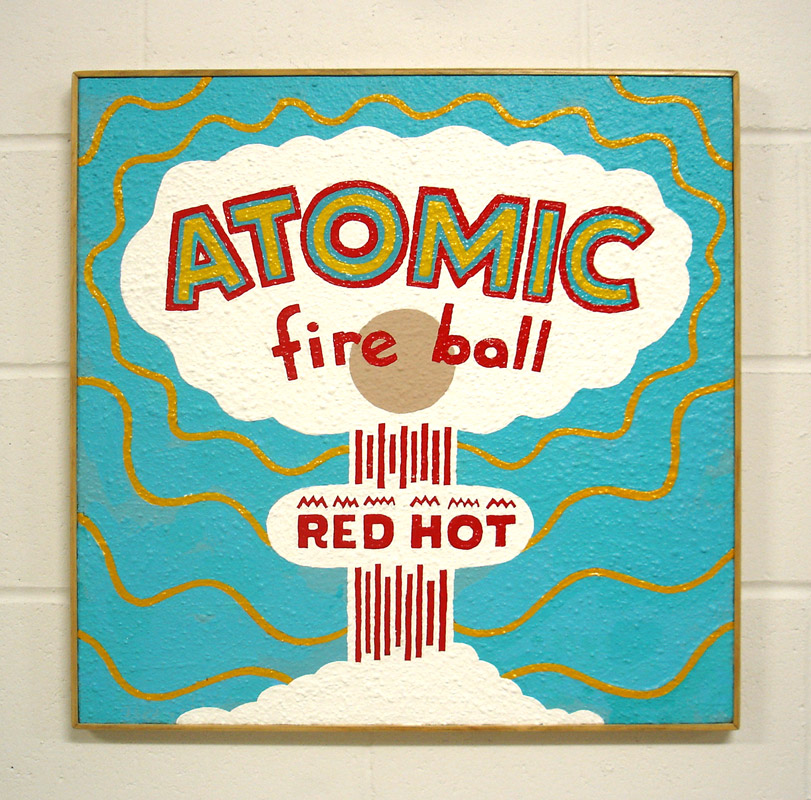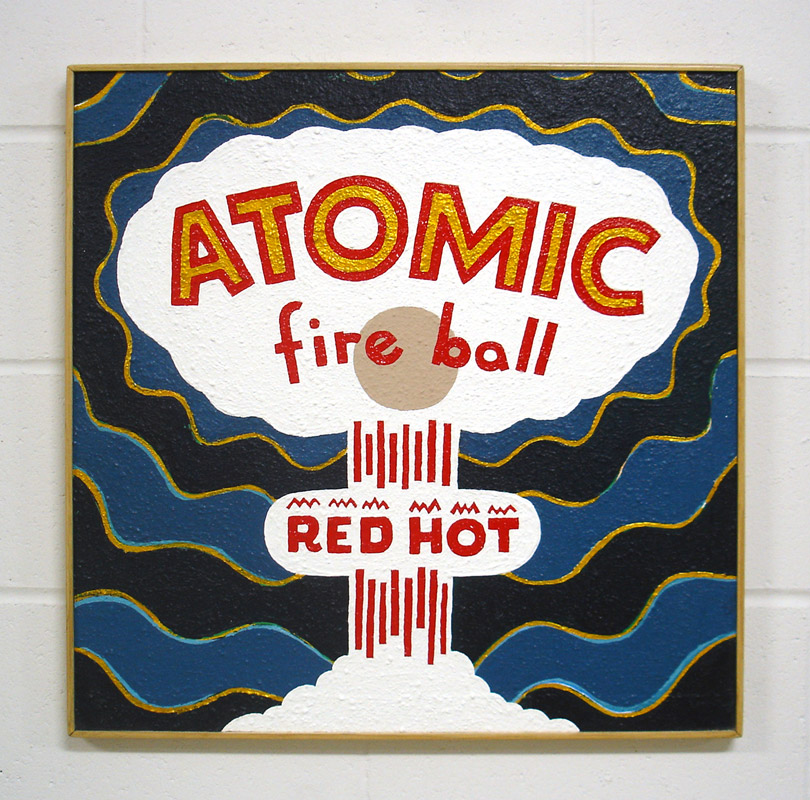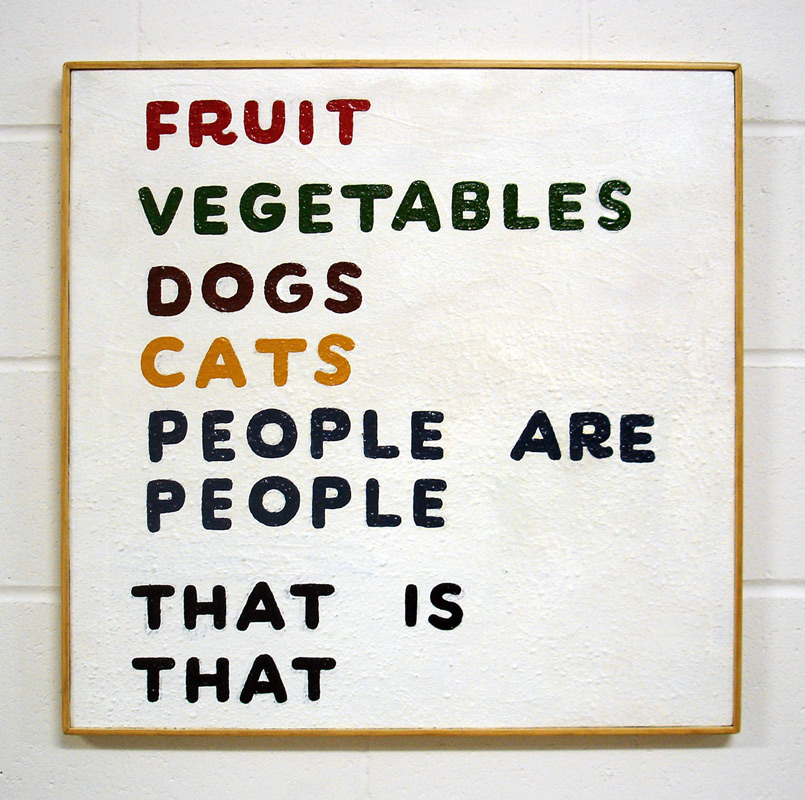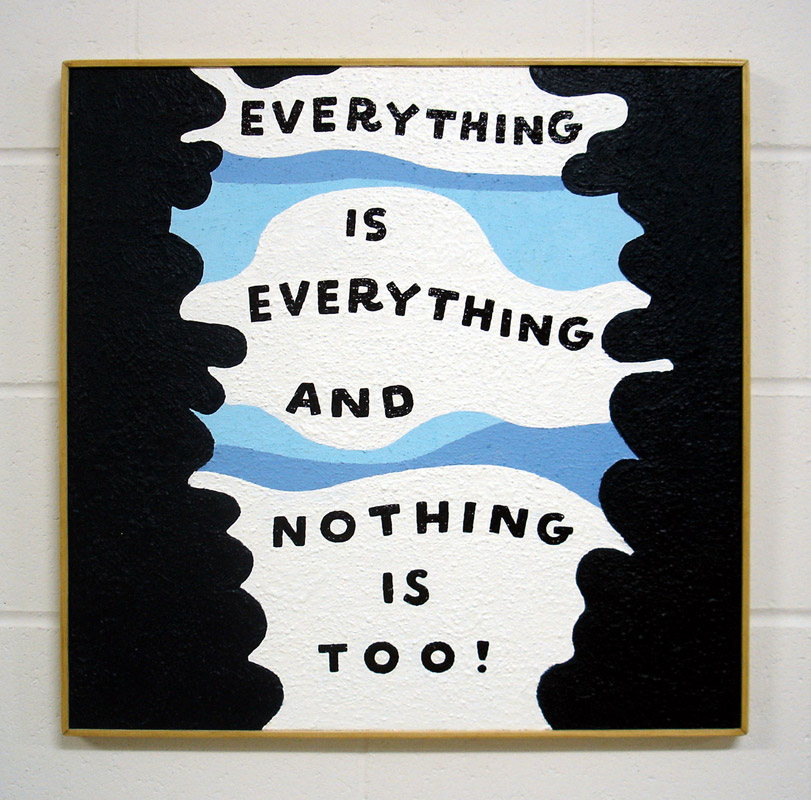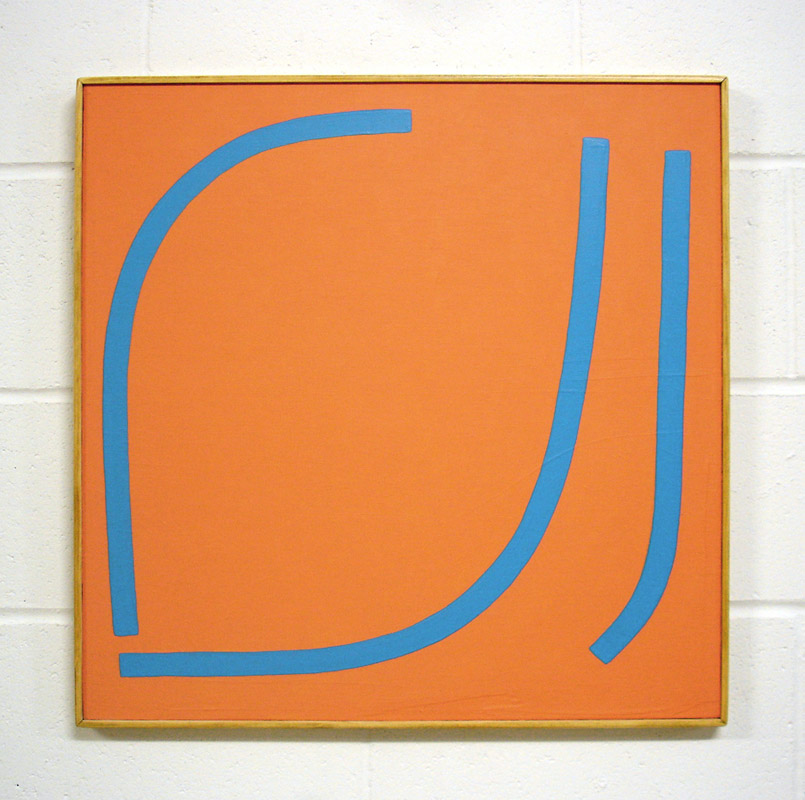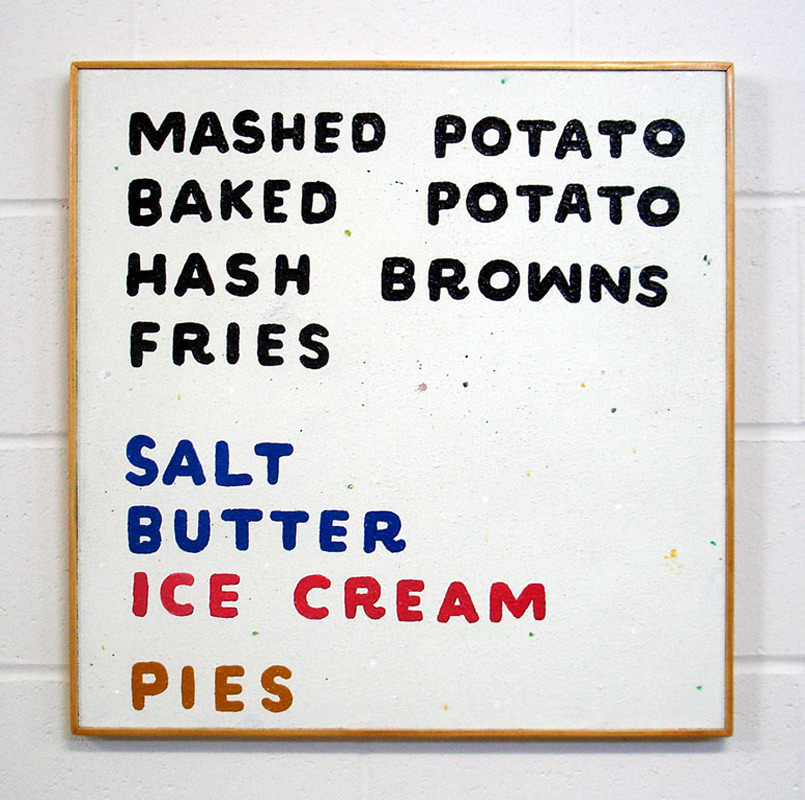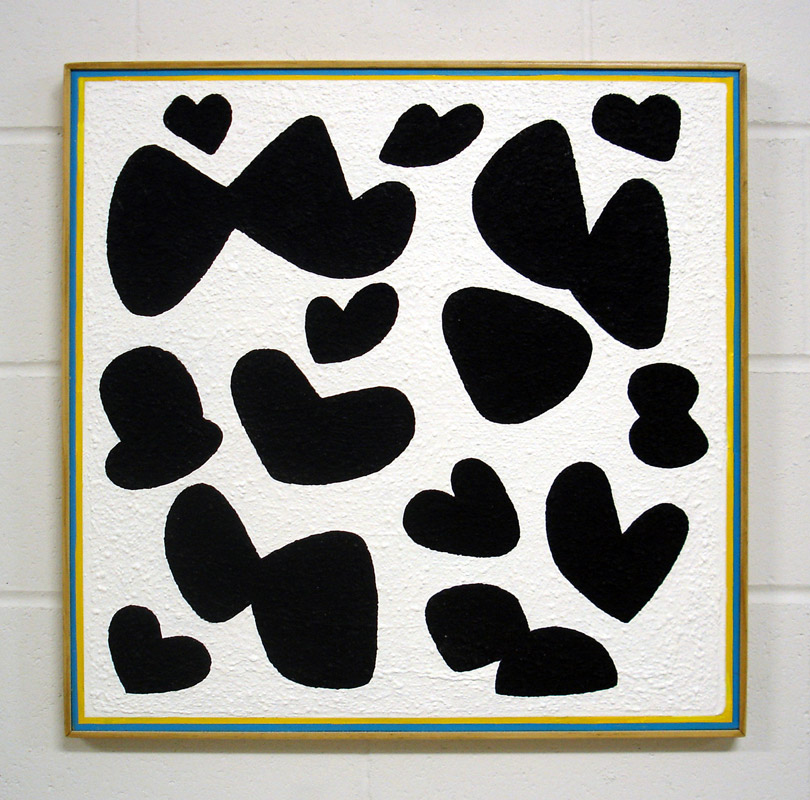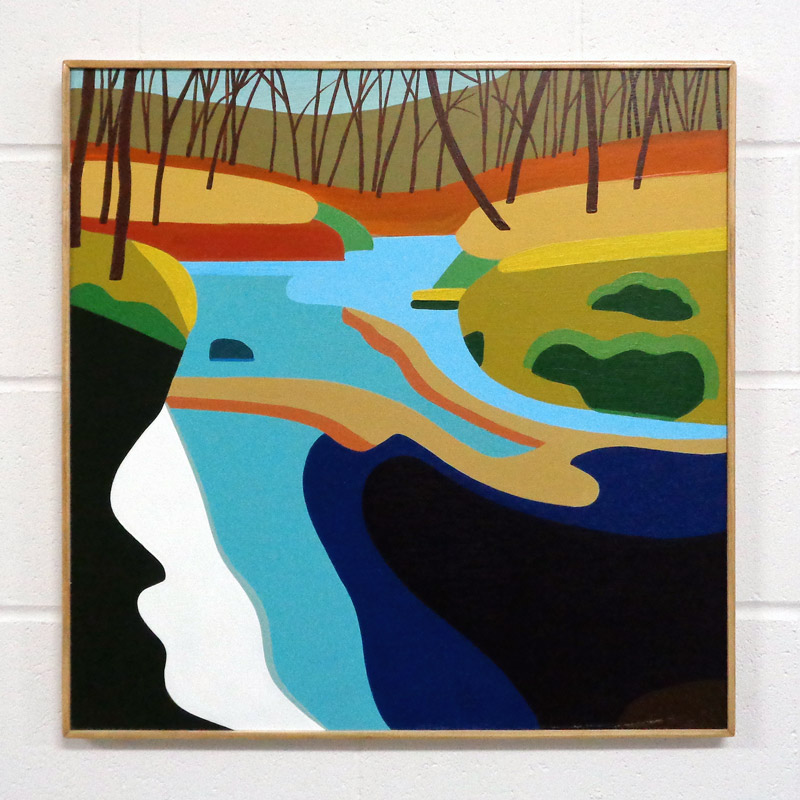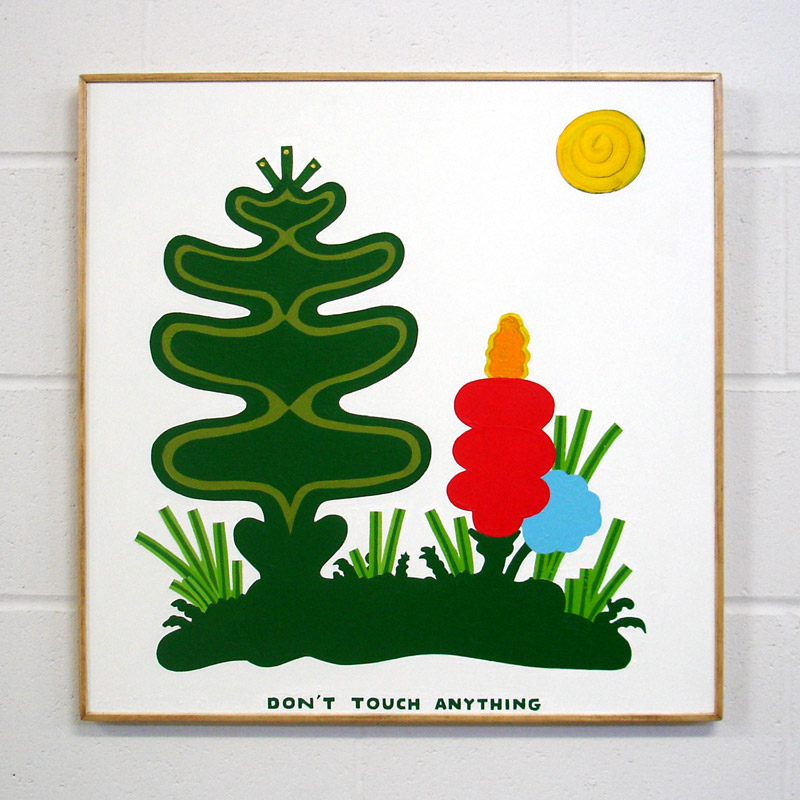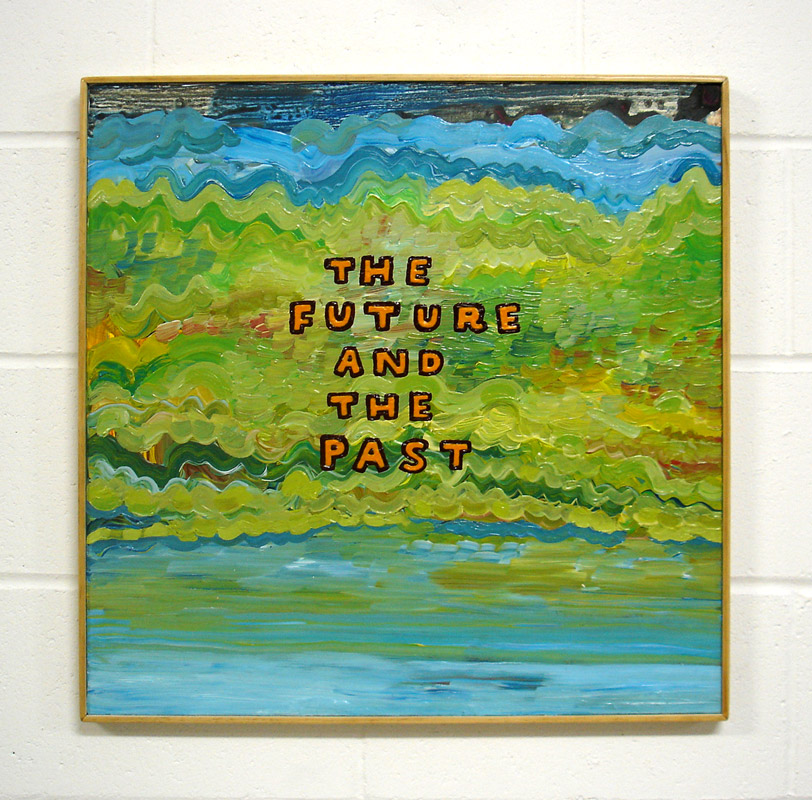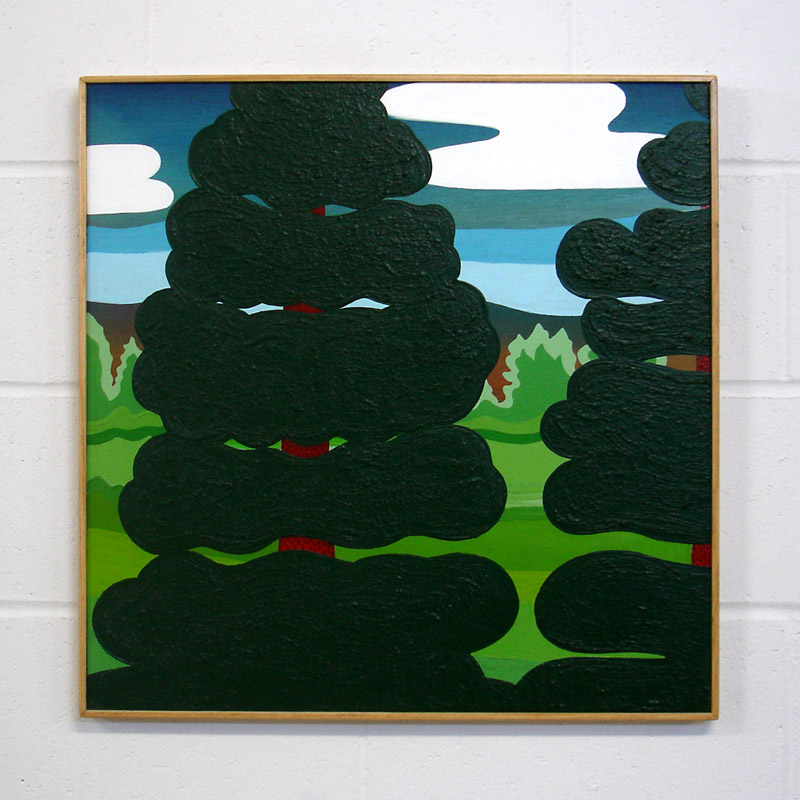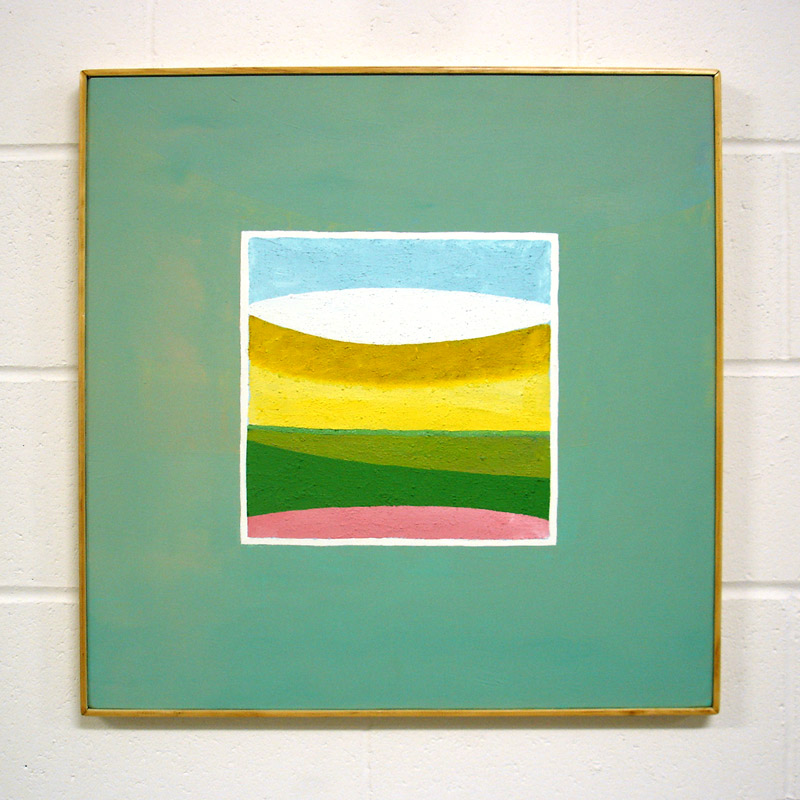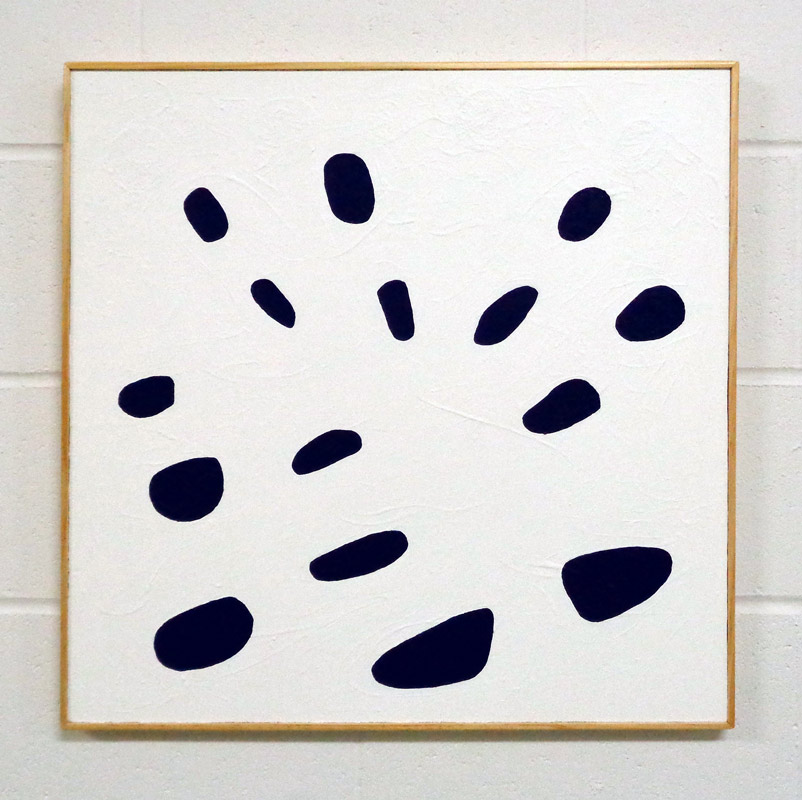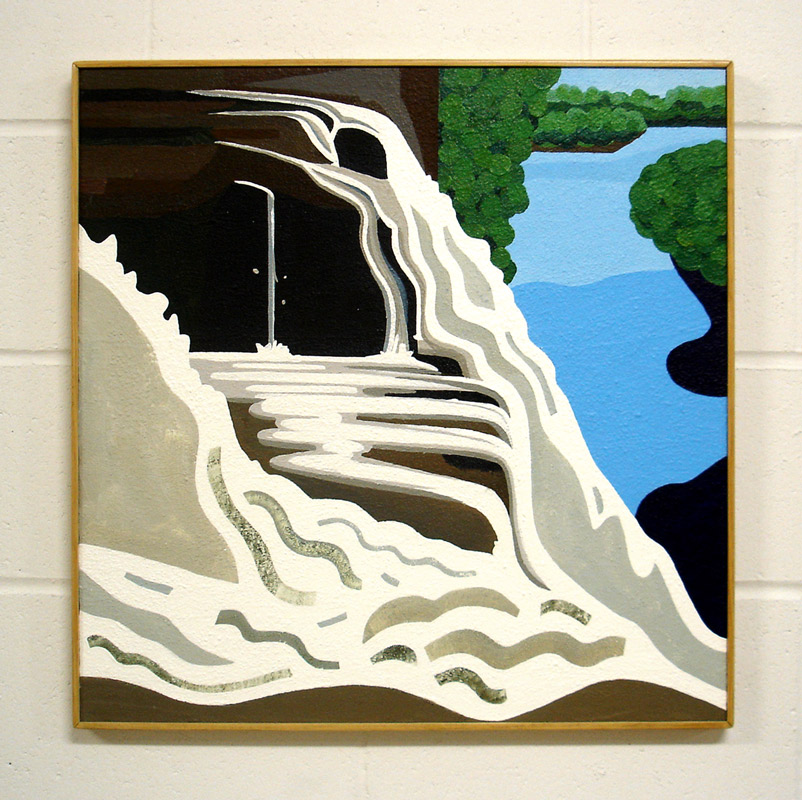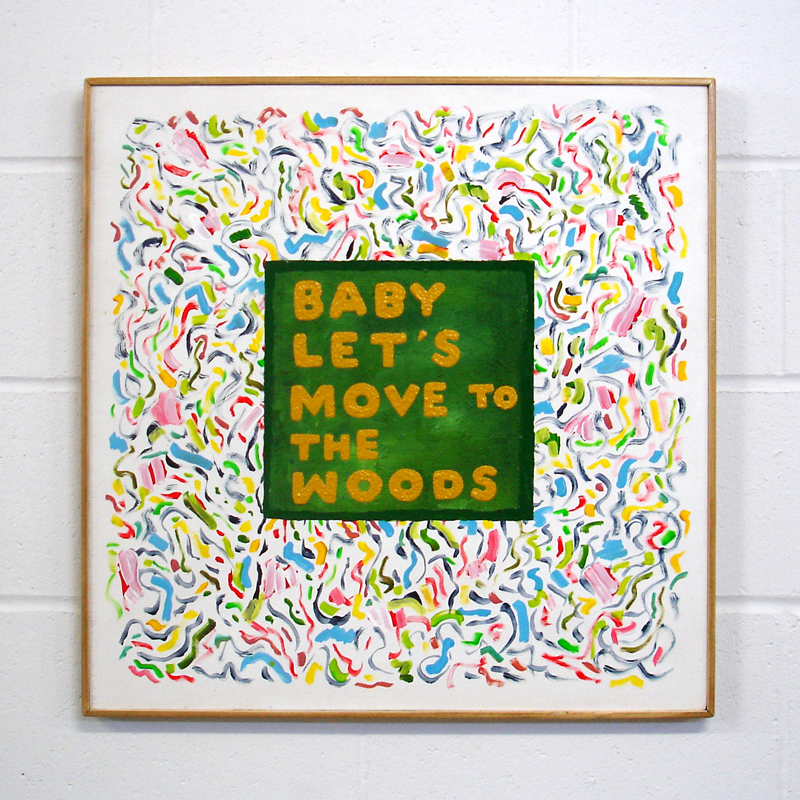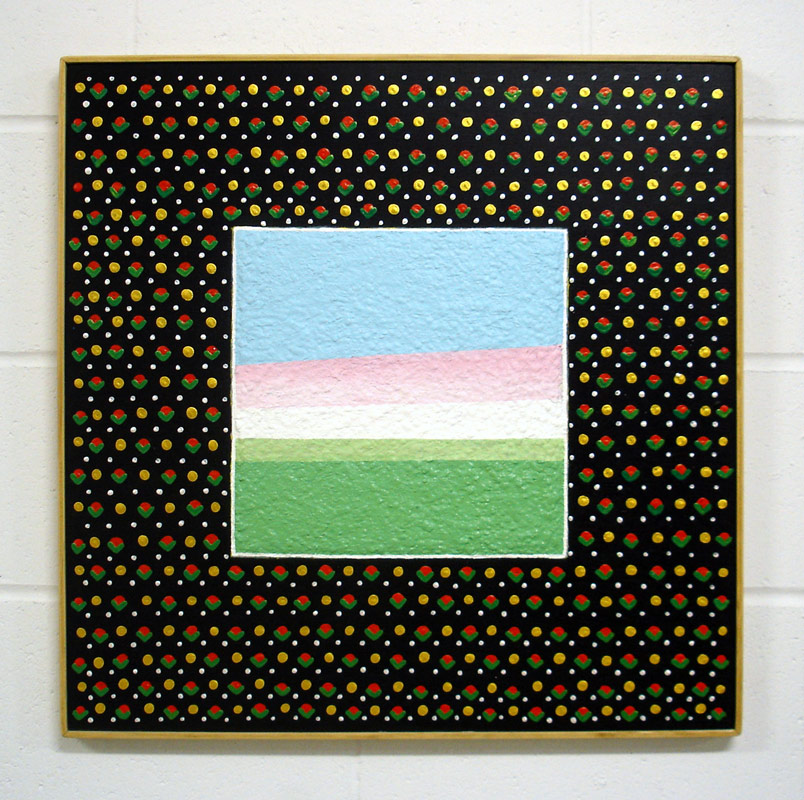
In late 2008, Tim Wirth began organizing his studio practice around building square paintings that function as three-dimensional objects. Although they have an intended front display and are framed to hang on a wall, the backsides also feature a painted image consisting of date, location, title, and signature. Wirth’s unique craftsmanship and approach has attracted collectors from across the United States, UK, and elsewhere.
“I wanted to find a way to explore any visual terrain I wanted without getting lost. For the most part I painted on squares anyway, so it wasn’t hard to limit myself to that format. A full 4′x8′ sheet of birch yields eight equal squares without any scraps. That’s nice. And the square is fundamental. It’s got an inherent truth and logic about it. Four equal sides. The formalist in me requires it. I also enjoy the cultural baggage with the word “square”. When it appears as slang, it can either be a compliment or an insult. Originally, it referred to someone who was honest, traditional, and reliable. Popular culture later redefined it to describe someone who was rigid and old-fashioned.”
“Sometimes I like making images, sometimes I like the paint enough all by itself. Whatever happens usually happens through improvisation. Occasionally it’s premeditated, maybe I have a vague idea of something I want to say or try. The results are either graceful or clumsy or a combination of both. However, every individual painting belongs to that larger context – that family of squares. So each painting, regardless of whether it’s a hit, a miss, or a head-scratcher, contributes to the whole and is interesting in its own flawed and/or magical way. I like that, both in painting and elsewhere.”
“When a painting is finished, to be honest, I’m ready to kick it out the door and let it live on its own. Most times I suspect the painting is ready to get rid of me too. There’s a few here and there that I like to keep around, usually because I don’t know if I’m finished with them. But mostly, I like seeing how they handle themselves out in the world. So I try to make them attainable to anyone, which is why I price them all the same just like any other object you’d buy. I like the idea of someone being able to own more than one, or collecting them not as paintings to hang but as objects to store in an attic or basement.”
Each TW ORIGINAL SQUARE measures 25”x25”x2” and is roughly twelve pounds. They are hand built from birch panel and pine and framed in white pine, which is sanded down smooth like an instrument. No, you don’t have an option of a different frame. A Tim Wirth Square Painting is not exactly a picture, it’s an object first and foremost. You are welcome to display them however you desire, though they behave best on a wall.
On top of the frame, there’s often something painted. The painting’s title, the year it was made, the artist’s name, etc. On the backsides, there’s either a painted image, name, year, or some combination of all those things. These are wily objects, however they do arrive neatly packed in a box ready to unwrap and jump around your room. So if you choose to display it, do so with care. If you choose to store it, seal it up good.
To inquire about available inventory and current pricing, please email: timwirth@timwirth.com
Tim Wirth grew up on a farm in rural Iowa.
As a child, Tim enjoyed drawing pictures of people, objects, and gloomy desert scenes. He also liked building things like pinewood derby cars & various inventions that served little to no purpose. The first artist he recalls enjoying was George Catlin. Upon attending Buena Vista University in Storm Lake, Iowa, he discovered there were people like HC Westermann and Marcel Duchamp who once existed and made things too. This was fascinating to him, so he continued his studies at the Savannah College of Art and Design in Savannah, Georgia where he received his MFA in Painting. Upon finishing his studies he relocated to Des Moines, Iowa, where he worked in the plumbing department of a hardware store for a short time. After a year of that, he moved back to his native flat lands of northern Iowa to paint and make things.